When we picture a child who's ready for kindergarten, we often imagine someone who can recite the alphabet, count to twenty, or write their own name. Those skills matter, but they're rarely what makes the first weeks of school feel easy or hard.
Think about everything a child experiences during a typical kindergarten day. There are new routines to follow, classmates to get to know, instructions to understand, and moments when things don't go exactly as planned.
The skills that truly prepare children are often quieter ones. They include following simple directions, waiting for a turn, asking for help, and managing a big feeling without becoming overwhelmed.
At MyPlace Early Learning Center in Katy, TX, we believe kindergarten readiness is about much more than academic milestones. It's about helping children feel comfortable, capable, and confident as they take their next big step.
And many of those important skills are developed through the small, everyday moments that make up early childhood.
Here are seven that can make a meaningful difference.
1. Following Simple Directions
Picture a classroom where the teacher asks everyone to put away their materials, wash their hands, and get ready for lunch.
For adults, these instructions might seem simple. But for young children, listening, remembering what comes next, and moving from one activity to another are skills that take time and practice.
Following directions isn't just about doing what an adult says. It involves attention, understanding, memory, and the ability to participate in a group.
Children develop these abilities gradually through familiar routines, games, songs, and everyday classroom activities.
At MyPlace, transitions between playtime, learning, meals, and outdoor activities give children opportunities to practice listening and following instructions in a supportive environment.
The goal isn't perfect behavior. It's helping children become increasingly comfortable understanding what's expected of them.
And when kindergarten begins, that familiarity can make a new classroom feel a little less overwhelming.
2. Waiting for a Turn and Learning to Share
Sometimes kindergarten readiness looks like a child patiently waiting for the blue crayon.
Or taking turns on the playground.
Or learning that another child might want to play with the same toy.
These moments may seem small, but they're an important part of learning how to be a member of a classroom community.
In kindergarten, children spend much of their day learning alongside others. They share materials, participate in group activities, and discover that everyone has different ideas, feelings, and needs.
Waiting and sharing don't always come naturally, especially when children are excited about something.
That's why practice matters.
Through cooperative games, classroom activities, and everyday interactions with friends, children begin to understand how their actions affect others.
They learn that waiting doesn't mean missing out, that sharing can create opportunities for connection, and that friendships sometimes require compromise.
These are lessons that go far beyond the classroom.
3. Knowing How to Ask for Help
Imagine a child sitting in a classroom with a lunch container they can't open.
They could become frustrated, give up, or sit quietly without eating.
But a child who feels comfortable raising their hand and saying, "Can you help me?" has an important tool for navigating that situation.
Being ready for kindergarten doesn't mean being able to do everything independently.
It means beginning to recognize when help is needed and feeling confident enough to ask for it.
Children need opportunities to express what they want, explain what they're feeling, and communicate when something isn't working.
These skills grow through conversations, play, and trusting relationships with adults.
At MyPlace, we encourage children to use their voices, ask questions, and share their ideas.
Sometimes that means helping a child find the words to describe a problem. Other times, it means giving them a little space to speak for themselves.
Because confidence isn't about always knowing the answer.
It's also about knowing that it's okay to ask.
4. Managing Big Feelings
A favorite activity comes to an end.
A friend doesn't want to share.
A block tower falls apart after several minutes of careful work.
For a young child, any of these moments can bring disappointment, frustration, or tears.
And that's completely normal.
Kindergarten introduces children to new expectations, relationships, and experiences. Along the way, there will be moments when things feel difficult.
Emotional readiness doesn't mean children never get upset. It means they're beginning to recognize their feelings and develop strategies to work through them with support.
Maybe they take a few deep breaths.
Maybe they tell a teacher they're frustrated.
Maybe they learn that stepping away for a moment can help them feel ready to try again.
These are meaningful achievements.
At MyPlace, social-emotional development is woven into everyday experiences. Teachers help children recognize emotions, navigate disagreements, and discover healthy ways to express themselves.
With patience, encouragement, and consistent support, children begin to understand that difficult feelings don't have to stop them from moving forward.
And that understanding can make a big difference in a new classroom.
5. Doing Little Things Independently
There's a special kind of pride in hearing a child say, "I did it myself!"
Maybe they zipped their backpack for the first time.
Maybe they remembered to put their belongings away.
Or maybe they washed their hands without needing a reminder.
These small accomplishments help children develop independence and confidence.
Kindergarten brings many opportunities to take responsibility for everyday tasks. Children are encouraged to manage their belongings, participate in classroom routines, and become more involved in caring for themselves.
The process begins long before the first day of school.
In an early learning environment, children practice independence through age-appropriate responsibilities and daily routines.
And while they may still need assistance, each opportunity to try helps them become a little more capable.
At MyPlace, we celebrate these small steps because we know they lead to something bigger: children who are proud of what they can accomplish.
Independence isn't about doing everything alone.
It's about believing, "I can try."
6. Being Willing to Try Again
A puzzle piece doesn't fit.
A drawing doesn't look the way a child imagined.
A building made of blocks keeps falling over.
What happens next?
For young children, learning to keep trying when something feels challenging is an important part of developing confidence.
Kindergarten will introduce new concepts, activities, and expectations. Not everything will be easy the first time, and that's okay.
Children who are encouraged to experiment, ask questions, and explore different solutions begin to understand that mistakes are part of learning.
They discover that something difficult today might become easier with practice.
This is one of the reasons hands-on learning is so valuable in early childhood.
At MyPlace, STEAM-inspired activities invite children to explore, build, create, and solve problems through meaningful play.
Instead of focusing only on the finished result, we encourage curiosity and discovery throughout the process.
Sometimes the most valuable part of an activity isn't completing it.
It's watching a child realize they can try a different approach.
That willingness to keep learning is something they'll carry into kindergarten and beyond.
7. Building Confidence Through Play and Movement
Kindergarten readiness isn't developed only through conversations and classroom routines.
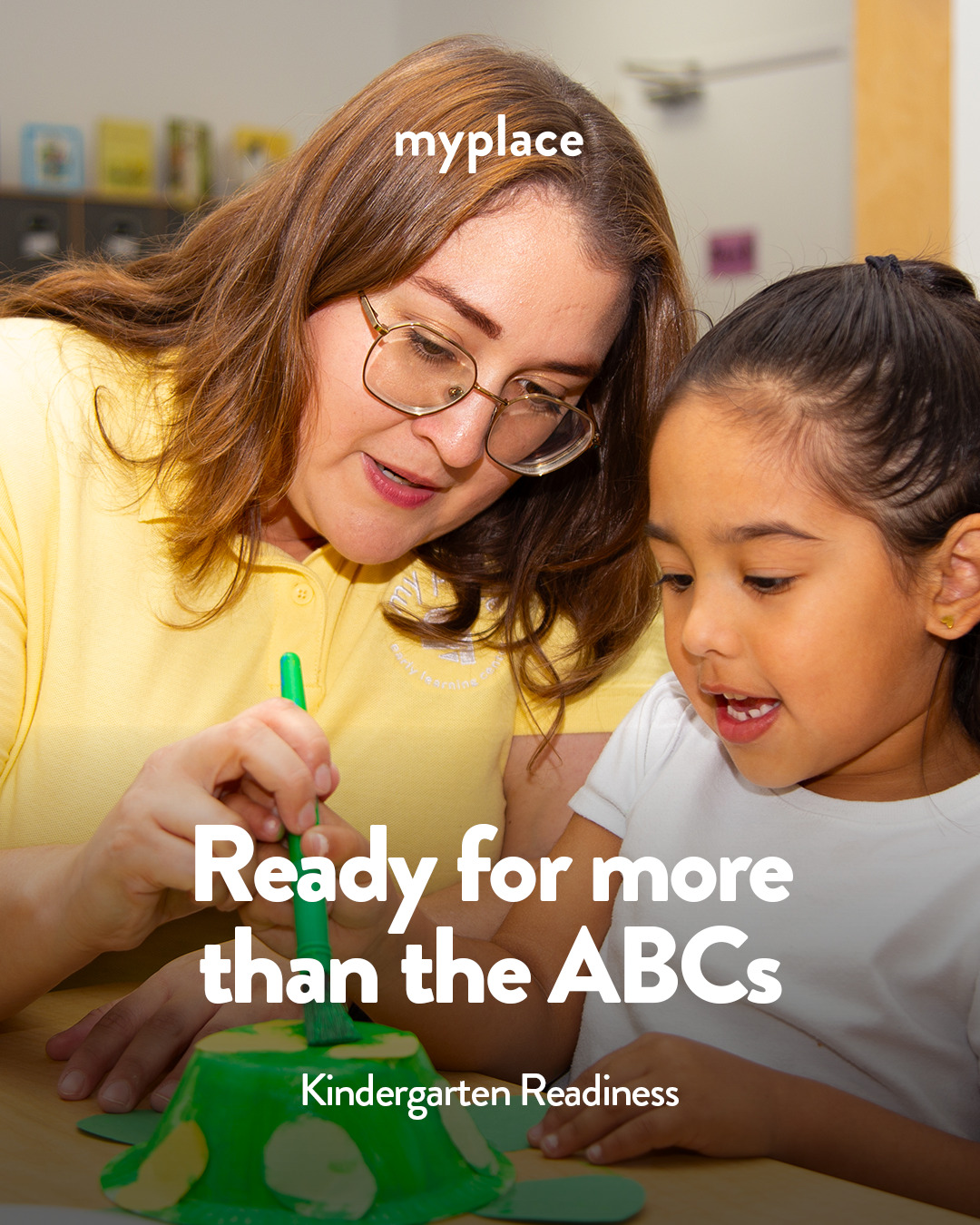
It also happens when children run, climb, draw, paint, build, and explore the world around them.
These experiences support physical development, coordination, and the motor skills children use throughout the school day.
Holding a pencil, using child-safe scissors, opening a lunchbox, and handling classroom materials all involve skills that develop through practice.
Outdoor play helps children strengthen balance, coordination, and body awareness.
Creative activities allow them to explore how their hands work while expressing their ideas.
And perhaps most importantly, these experiences give children opportunities to feel capable and enjoy the process of learning.
At MyPlace, we recognize that movement, creativity, and play are essential parts of early childhood development.
Because preparing for kindergarten doesn't mean spending every moment practicing letters and numbers.
It means giving children room to grow in all the ways that matter.
So, What About the ABCs?
Of course, letters and numbers still have an important place in kindergarten preparation.
Early literacy, counting, recognizing patterns, and exploring language help children build a foundation for future academic learning.
But academic knowledge is only part of the picture.
A child might know every letter of the alphabet and still find it difficult to join a group activity, ask for assistance, or adjust to an unfamiliar routine.
Another child might still be learning their letters but feel comfortable making friends, asking questions, and approaching new experiences with curiosity.
Both children have strengths, and both are still growing.
Kindergarten readiness isn't about checking every box before the first day of school.
It's about nurturing the many different abilities that help children participate, connect, explore, and learn.
And those abilities develop over time, through experiences that are often much more meaningful than memorization alone.
How MyPlace Builds Kindergarten Readiness Every Day
At MyPlace Early Learning Center, we don't believe kindergarten readiness should be limited to a few worksheets or a list of academic milestones.
We see it in the everyday moments that shape how children learn and interact with the world.
It's there when two children work together to finish a puzzle.
When a teacher helps a child find the words to explain how they're feeling.
When someone proudly cleans up their activity without being asked.
Or when a child who struggled with something yesterday decides to try again today.
These moments are part of how confidence grows.
Through our Preschool and Pre-K programs, we bring together early literacy, mathematics, creative exploration, hands-on STEAM activities, and social-emotional learning.
Our approach recognizes that every child develops at their own pace and deserves encouragement along the way.
For families whose young five-year-olds may benefit from additional time before kindergarten, our Kinder Bridge program offers another opportunity to continue building important developmental and learning skills.
Throughout every stage, we focus on creating a nurturing environment where children feel known, supported, and excited about discovering what they can do.
Because preparing children for kindergarten is also about helping them believe in themselves.
Ready for Kindergarten Means Ready to Grow
The first day of kindergarten is an exciting milestone for children and parents alike.
And while knowing the ABCs is worth celebrating, the quieter achievements deserve just as much attention.
The first time a child asks for help instead of giving up.
The moment they wait patiently for their turn.
The day they discover they can handle a difficult feeling.
Or the proud smile that follows a simple, "I did it myself."
These are the moments that build confidence, independence, and a foundation for learning.
At MyPlace, we're proud to be part of that journey.
As a locally owned early learning center serving Katy families, we believe meaningful relationships and everyday experiences make all the difference in helping children grow.
We'd love to show you how those moments come to life in our classrooms.
Visit our Woodcreek or Cinco Ranch campus and discover how MyPlace helps children prepare for kindergarten and everything that comes next.
Schedule Your Personal Tour Today
MyPlace Early Learning Center. Rooted in Care. Inspired by Learning.